
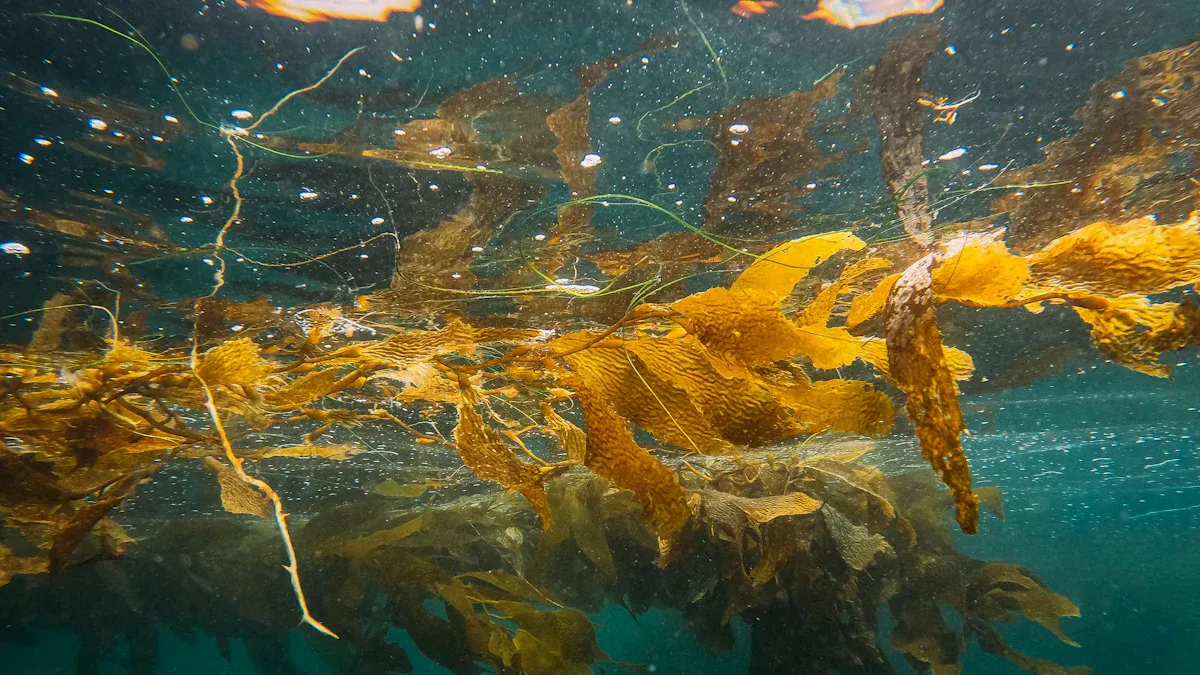
Seaweed, often spelled seaweed in some contexts, refers to marine algae that grow in oceans and other water bodies. You can find three main types: brown, red, and green. Each type offers unique features and uses, making seaweed an important resource worldwide. In 2020, people consumed about 31 million tons of seaweed, and the market value reached $17.5 billion in 2024. Most seaweed comes from Asia-Pacific countries, with China and Japan leading the way.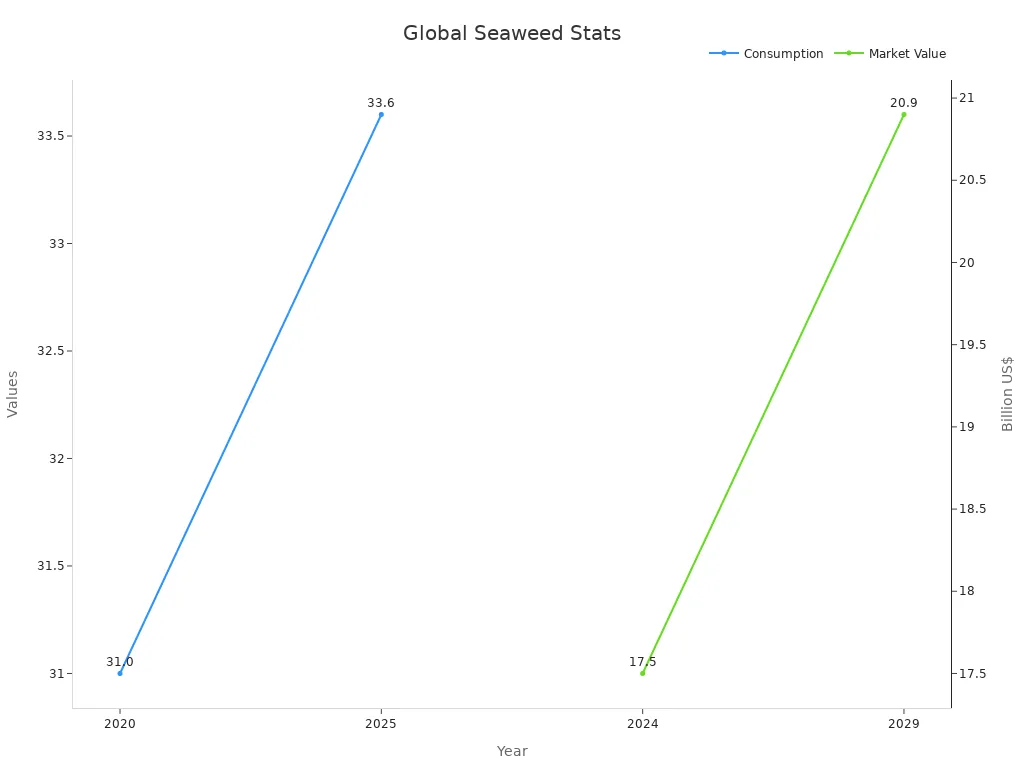
Key Takeaways
- Seaweed is a group of marine algae that includes three main types: brown, red, and green, each with unique colors and features.
- Brown seaweed like kelp grows in cold waters and forms underwater forests that support marine life and help fight climate change.
- Red seaweed is diverse and often used in foods like sushi; it grows deeper in the ocean and helps build coral reefs.
- Green seaweed grows in shallow waters and freshwater, provides important nutrients, and shares traits with land plants.
- Seaweed offers many benefits: it is nutritious, supports marine ecosystems, helps farmers, and contributes to a cleaner environment.
Seaweed Overview
Definition
You can think of seaweed as a group of marine plants and algae that live in oceans and other water bodies. Seaweed includes many species, from tiny phytoplankton to giant kelp forests. These organisms come in different colors, such as red, green, brown, and even black. Unlike land plants, seaweed does not have true roots. Instead, it uses holdfasts to anchor itself to rocks or the sea floor. These holdfasts only help with attachment and do not take in nutrients. Seaweed grows mostly along seashores and in shallow waters, usually up to about 50 or 60 meters deep. You will often see dense patches of seaweed in these areas, where they provide food and shelter for many marine animals.
Note: Seaweed is not a weed in the usual sense. It plays a vital role in marine ecosystems and supports a wide range of sea life.
Characteristics
Seaweed shows many unique features that set it apart from other plants. Here are some key characteristics:
- Seaweed belongs to a group called marine macroalgae. These are eukaryotic, autotrophic organisms, which means they make their own food using sunlight.
- Scientists classify seaweed into three main groups based on their pigments: green algae (Chlorophyta), red algae (Rhodophyta), and brown algae (Ochrophyta or Phaeophyceae).
- Seaweed lacks true roots and stems. Instead, it absorbs nutrients directly across its surface.
- You can find seaweed in shallow marine environments, where sunlight can reach it for photosynthesis.
- There are about 15,000 known species of macroalgae, but over 30,000 species of algae overall.
- Seaweed varies greatly in size. Some types are only a few centimeters long, while others, like kelp, can reach up to 100 meters.
You will notice that seewead forms the base of many marine food webs. It also helps create important habitats for fish, shellfish, and other sea creatures.
Seaweed Types

Seaweed comes in three main types: brown, red, and green. Scientists classify these groups based on their color, structure, and the pigments they use for photosynthesis. Each type has unique features, habitats, and uses. You can find these seawead types in oceans around the world, from cold northern waters to warm tropical seas.
Brown
Brown seaweed, known as Phaeophyceae, stands out because of its yellow-brown to dark brown color. This color comes from a pigment called fucoxanthin, which covers the green of chlorophyll. Brown seaweed grows mostly in cold, nutrient-rich waters. You often see it along rocky coastlines and in underwater forests.
- Kelp is the most famous example of brown seaweed. Kelp forests can stretch for miles and provide homes for many marine animals. Over 100 species of kelp exist, and they play a big role in ocean health by absorbing carbon and supporting biodiversity.
- Other common brown seaweeds include wakame, kombu, and hijiki. People in East Asia farm these types for food and industry.
- Brown seaweed has special parts like holdfasts (for anchoring), stipes (stem-like structures), blades (leaf-like parts), and sometimes air bladders that help them float.
Did you know? Kelp forests have declined by up to 60% in the last 50 years due to climate change and pollution. These forests are vital for marine life and help fight climate change by storing carbon.
Red
Red seaweed, or Rhodophyta, shows a wide range of red, pink, and purple shades. The red color comes from pigments called phycoerythrins. Red seaweed grows in both warm and cold waters, often deeper than brown or green types because its pigments absorb blue light well.
- Nori (Porphyra) is a well-known red seaweed. You eat it in sushi and snacks. Other examples include dulse, Irish moss (Chondrus crispus), and Gracilaria.
- Red seaweed is the most diverse group, with thousands of species. Some, like Corallina, even help build coral reefs by depositing calcium.
- Many red seaweeds have thin, delicate fronds. Some feel almost like paper, while others are bushy or branched.
You find red seaweed in many cultures. People in Japan, Korea, and China eat nori and laver. In Ireland and Scotland, dulse is a traditional food.
Green
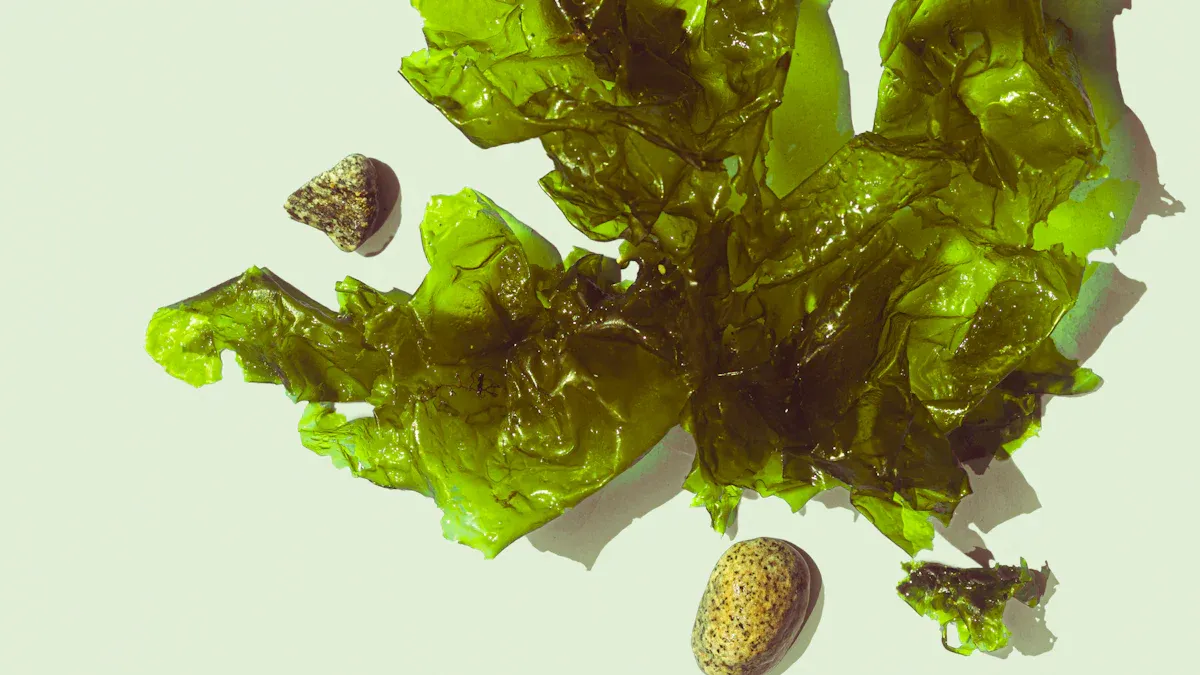
Green seaweed, called Chlorophyta, looks bright green because it contains mostly chlorophyll pigments. You find green seaweed in both freshwater and marine environments, but it is less common in the ocean than brown or red types.
- Sea lettuce (Ulva lactuca) is a popular green seaweed. It grows in thin, leafy sheets along coasts and tidal pools.
- Other green seaweeds include Caulerpa and Enteromorpha. Some look like grapes or spaghetti.
- Green seaweed shares some features with land plants, such as similar pigments and cell structures.
Green seaweed plays a role in food and ecosystems. Sea lettuce is eaten in salads and soups in many countries. It also provides shelter for small sea creatures.
Table: Key Features and Examples of Seaweed Types
| Type | Scientific Group | Color Range | Common Examples | Main Habitats | Notable Uses |
|---|---|---|---|---|---|
| Brown | Phaeophyceae | Yellow-brown to dark | Kelp, Wakame, Kombu | Cold, rocky coasts, kelp forests | Food, fertilizer, industry |
| Red | Rhodophyta | Red, pink, purple | Nori, Dulse, Gracilaria | Warm and cold seas, deeper waters | Food (sushi, snacks), agar |
| Green | Chlorophyta | Bright green | Sea lettuce, Caulerpa | Shallow coasts, tidal pools, freshwater | Food, animal feed |
You can see that each seafood type brings something special to the ocean and to your table. Brown seaweed forms underwater forests, red seaweed offers many edible varieties, and green seaweed connects closely to land plants. Scientists use both physical traits and genetic studies to classify these groups. This helps you understand how seaweed supports marine life and human needs.
Differences
Color
You can easily spot the differences among seaweed types by their color. Brown seaweed shows yellow-brown to dark brown shades because of a pigment called fucoxanthin. Red seaweed appears red, pink, or purple due to phycoerythrins. Green seaweed looks bright green because it contains mostly chlorophyll. Marine biology studies show that these color differences matter for animals that use seaweed for camouflage. For example, wild prawns match their color to seaweed for better hiding. The table below shows how closely prawns match the color of different seaweed types:
| Aspect | Comparison | Statistic (F or X2) | p-value | Key Result |
|---|---|---|---|---|
| Color JNDs (wild prawns) | Green prawns vs green sea lettuce | F1,252 = 544.18 | < 0.001 | Close color match |
| Color JNDs (wild prawns) | Green prawns vs red dulse | – | – | Poor color match |
| Color JNDs (wild prawns) | Red prawns vs red dulse | – | – | Close color match |
| Color JNDs (wild prawns) | Red prawns vs green sea lettuce | – | – | Poor color match |
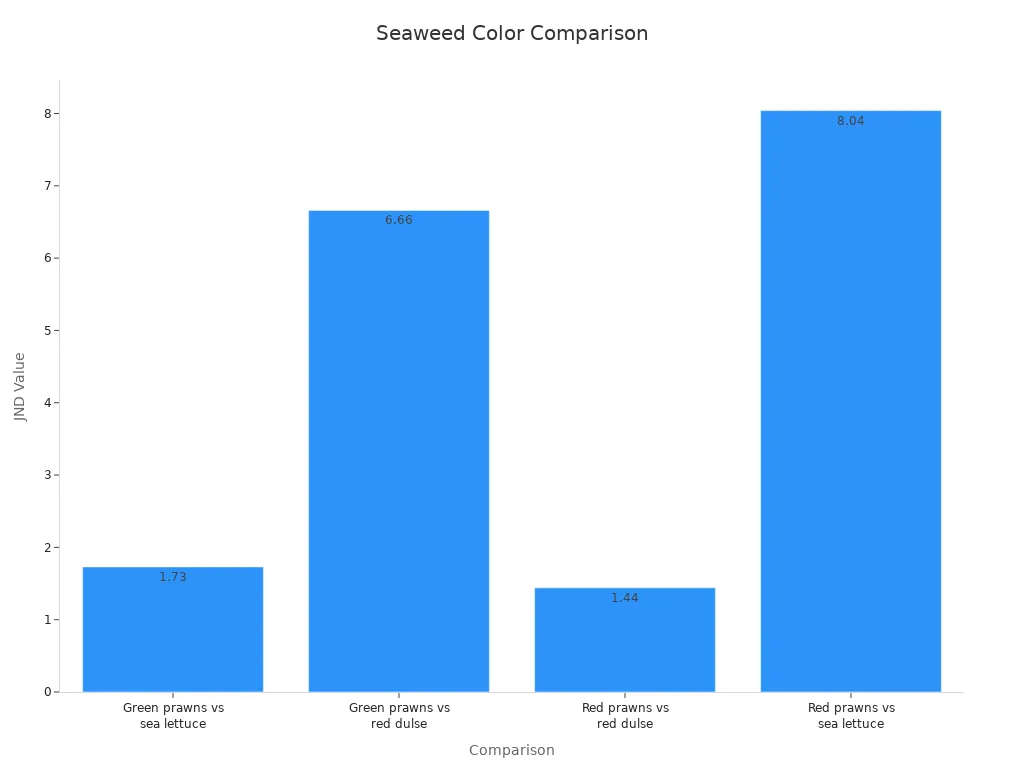
Seaweed color helps animals blend in and avoid predators. This is one reason why color matters in the ocean.
Structure
Seaweed types also differ in structure. You will notice these differences if you look closely:
- Brown seaweed, like kelp, often forms large underwater forests with long, flat blades and air bladders that help them float.
- Red seaweed usually has thin, delicate, or bushy fronds. Some, like Irish moss, feel almost like paper.
- Green seaweed, such as sea lettuce, grows in thin, leafy sheets or sometimes in shapes that look like grapes or spaghetti.
- Water content changes based on the shape of the seaweed. Flat fronds hold more water than filamentous types.
- Brown seaweed contains special carbohydrates like laminarin, alginate, and fucoidan. Red seaweed has carrageenan and floridean starch. Green seaweed has its own unique polysaccharides.
These structural differences help each type survive in its own habitat. Kelp forests, for example, create shelter for many sea animals.
Nutrition
You get different nutrients from each seaweed type. Brown, red, and green seaweeds all provide vitamins, minerals, and fiber, but the amounts vary:
- Brown seaweed offers high levels of carbohydrates, especially laminarin and alginate. It also contains magnesium, calcium, and vitamin K.
- Red seaweed, such as nori and dulse, gives you protein, fiber, and minerals like zinc. Some types, like Pyropia, have the highest carbohydrate and trace mineral content.
- Green seaweed, like sea lettuce, contains more protein and essential amino acids than other types. It also has a good amount of fiber and antioxidants.
Tip: Eating a mix of seewead types helps you get a wider range of nutrients for better health.
Seaweed Uses
Edible Varieties
You can find many edible seaweed varieties in stores and markets around the world. Some of the most popular types include wakame, kombu, nori, and dulse. Each type offers different nutrients and flavors. For example, nori is often used in sushi, while kombu and wakame are common in soups and salads.
Here is a table showing the nitrate, nitrite, and iodine content in some common edible seaweeds:
| Seaweed Variety | Nitrate (mean ± SD) | Nitrite (mean ± SD) | Iodine (mean ± SD) |
|---|---|---|---|
| Nori (Clearspring) | 17,191.33 ± 980.89 | 3.64 ± 2.38 | 16.30 ± 0.56 |
| Kombu (Mara seaweed) | 188.00 ± 1.73 | 0.40 ± 0.06 | 4061.30 ± 271.66 |
| Kombu powder (Mara seaweed) | 4475.33 ± 42.36 | 0.79 ± 0.06 | 3261.70 ± 110.65 |
| Kombu (Clearspring) | 7.33 ± 2.52 | 0.22 ± 0.03 | 2933.37 ± 154.19 |
| Wakame (Porto-Muiños) | 513.67 ± 21.29 | 1.55 ± 0.17 | 160.17 ± 1.76 |
| Wakame (Clearspring) | 178.67 ± 4.04 | 0.68 ± 0.02 | 99.77 ± 2.78 |
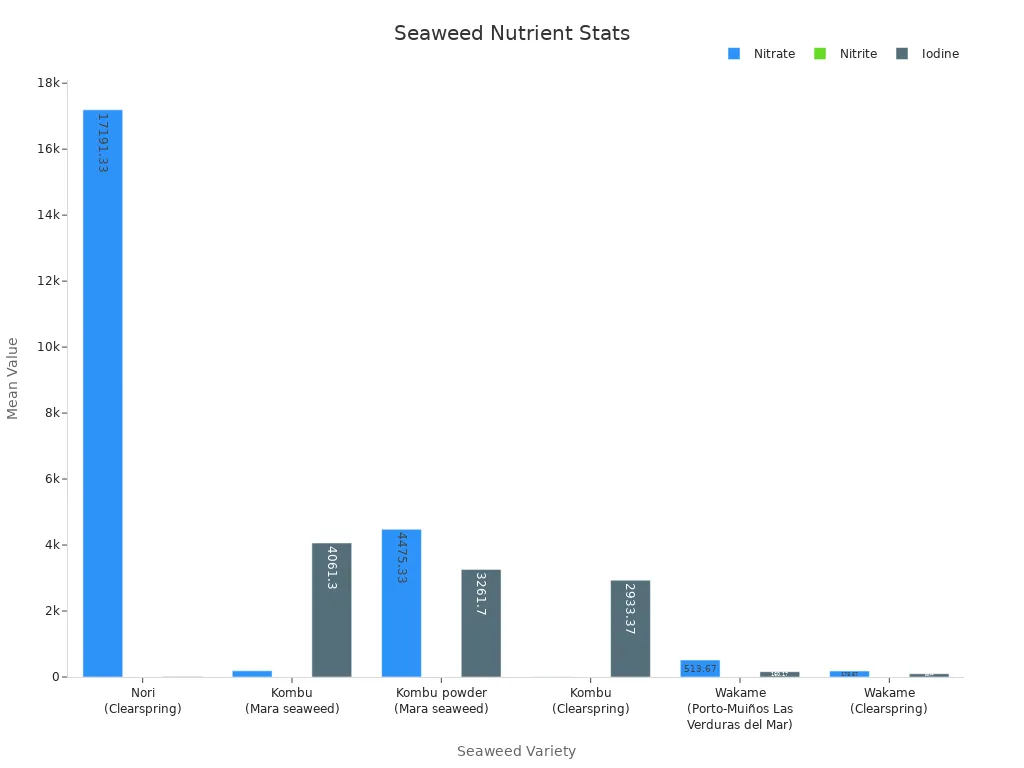
Note: Kombu and wakame contain much more iodine than nori. Eating large amounts of kombu can raise your iodine intake by 400–800% in a week. Children are especially sensitive to high iodine levels.
Culinary
You can enjoy seaweed in many dishes. People use nori to wrap sushi rolls. Wakame adds flavor and texture to miso soup. Kombu gives a rich taste to broths and stews. Dulse can be eaten as a snack or sprinkled on salads. You might find seaweed in noodles, chips, and even bread. Chefs value seaweed for its umami flavor, which makes food taste savory and satisfying.
A study with volunteers showed that eating 10 grams of nori, kombu, or wakame can change the amount of iodine and minerals in your body. Nori is usually eaten raw, while kombu and wakame are soaked before eating. This helps lower their iodine content and makes them safer to eat.
Other Uses
Seaweed is not just for eating. Farmers use seaweed extracts to help crops grow better. These extracts come from brown seaweeds like Ascophyllum nodosum and Durvillaea potatorum. They help plants handle stress, use nutrients more efficiently, and produce better fruit. You can also find seaweed in animal feed, especially for livestock in coastal areas.
Here are some other important uses of seaweed:
| Application Area | Description & Examples | Key Benefits & Notes |
|---|---|---|
| Fertilizers and Soil Conditioners | Used in Ireland, France, and other countries to improve soil and help plants grow. Products like “Afrikelp” are popular. | Improves soil moisture, adds nutrients, and helps crops. |
| Animal Feed | Added to livestock diets in Norway, France, and the UK. | Provides extra nutrients for animals. |
| Wastewater Treatment | Used to clean water by removing nitrogen, phosphorus, and heavy metals. | Helps protect the environment from pollution. |
| Biostimulants and Crop Growth Enhancers | Used in horticulture to boost yields and help plants resist drought and pests. | Contains natural plant growth regulators. |
Seaweed helps farmers grow more food and keeps the environment healthy. Scientists continue to study new ways to use seewead in agriculture and pollution control.
Comparison
Summary Table
You can compare the three main types of seaweed by looking at their features, uses, and examples. Each type has its own strengths and plays a special role in nature and in your daily life. Scientists use both chemical and physical traits to tell them apart. One important trait is the surface area to volume (SA:V) ratio. This ratio helps you understand how well a seaweed can take in nutrients and grow. A higher SA:V ratio means more surface for photosynthesis and faster growth, but it may also mean less strength against waves or animals.
Here is a table that shows the main differences:
| Seaweed Type | Key Features | Common Uses | Examples |
|---|---|---|---|
| Green (Chlorophyta) | High in dietary fiber and minerals like copper and zinc; contains healthy fatty acids; bright green color; high SA: V ratio for fast growth | Food, health products, animal feed, industry | Sea lettuce (Ulva lactuca), Caulerpa, Chaetomorpha |
| Brown (Phaeophyta) | Highest protein content; rich in lipids and special fatty acids; yellow-brown color; strong structure with air bladders; moderate SA: V ratio | Food, pharmaceuticals, fertilizers, and industry | Kelp (Sargassum), Wakame, Kombu, Padina |
| Red (Rhodophyta) | Highest mineral content; contains proteins, fiber, and unique pigments; red or purple color; often delicate structure; lower SA: V ratio | Food (sushi, snacks), health products, pharmaceuticals | Nori (Porphyra), Dulse, Gracilaria, Irish moss |
Tip: You can choose different seaweed types for different needs. Green seaweed grows quickly and adds minerals to your diet. Brown seaweed gives you more protein and is used in many foods and medicines. Red seaweed is rich in minerals and is popular in snacks and sushi.
- Seaweeds also provide important habitats for fish and other sea animals.
- Pigments from seaweed can act as antioxidants and are used in food and medicine.
- Scientists use the SA:V ratio to compare how seaweed types adapt to their environment.
You can see that each type of seaweed brings something unique to your table and to the ocean.
Understanding seaweed types helps you make better choices for your health, meals, and the planet. Seaweed offers strong nutritional value and supports a cleaner environment. You can see the benefits in the table below:
| Benefit Category | Key Findings |
|---|---|
| Environmental | No land or freshwater needed, absorbs CO2, reduces ocean acidification, improves water quality |
| Nutritional | High in protein, minerals, omega-3s, and fiber; supports gut and heart health |
- Exploring different seaweed types lets you enjoy new flavors and helps protect marine life.
- Choosing seaweed in your diet supports sustainable food systems and a healthier world.
FAQ
What is the safest way to eat seaweed?
You should rinse or soak seaweed before eating. This step lowers salt and iodine levels. Always buy seaweed from trusted sources. Avoid eating large amounts of high-iodine types like kombu every day.
Can you eat seaweed if you have allergies?
Most people can eat seaweed safely. If you have a seafood or iodine allergy, talk to your doctor first. Watch for any signs of an allergic reaction, such as itching or swelling.
How do you store dried seaweed at home?
Keep dried seaweed in an airtight container. Store it in a cool, dry place away from sunlight. Proper storage keeps seaweed fresh for months.
Is seaweed good for the environment?
Yes! Seaweed absorbs carbon dioxide and helps clean ocean water. It grows without soil or fresh water. Seaweed farming supports healthy marine life and reduces pollution.
What are some easy ways to add seaweed to your meals?
- Sprinkle dried seaweed flakes on rice or salads.
- Add seaweed to soups or stews.
- Use nori sheets to wrap sandwiches or snacks.
Seaweed gives your food extra flavor and nutrients.

