

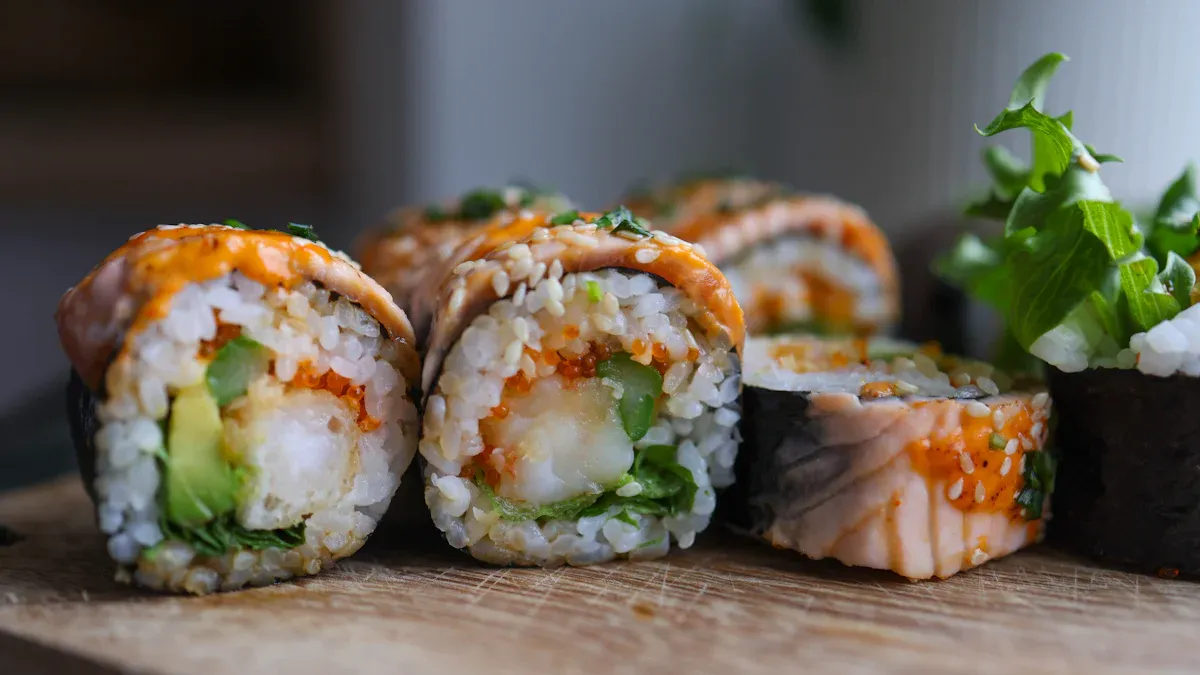
Making seaweed rolls at home is a fun and creative activity. You can choose your favorite fillings and enjoy a cleaner, fresher taste than store-bought options. Plus, the process is rewarding—you can make a big batch and even freeze some for later. Why not try it today?
Key Takeaways
- Pick good-quality nori and sushi rice for great taste and texture.
- Try different fillings like fresh veggies or proteins for tasty rolls.
- Use a bamboo mat or other tools to roll tightly and neatly.
Ingredients and Equipment for Seaweed Rolls
Essential Ingredients for Seaweed Rolls
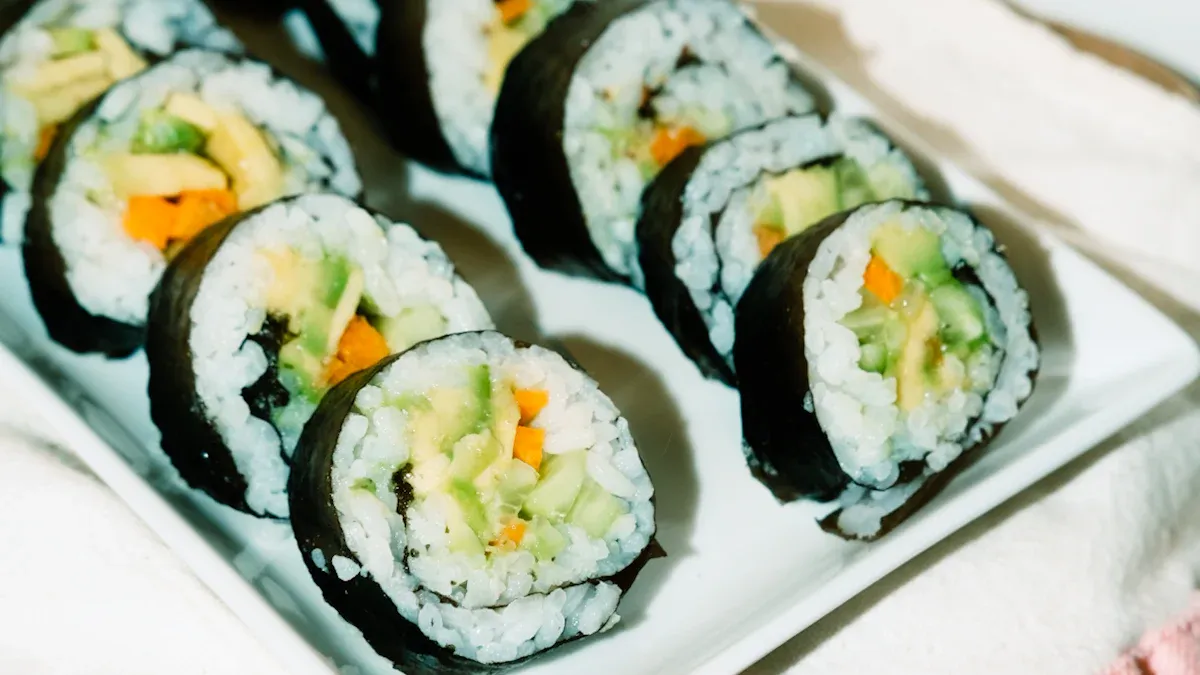
To make delicious seaweed rolls, you’ll need a few key ingredients. These are the building blocks of flavor and texture, so it’s worth choosing high-quality options:
- Nori (Seaweed Sheets): Nori is the star of the show. It’s packed with nutrients like iodine, magnesium, and vitamin K. Plus, it’s low in calories and adds a savory, umami flavor to your rolls.
- Sushi Rice: Short-grain rice works best because it’s sticky and holds the roll together. Season it with rice vinegar, sugar, and salt for that classic sushi taste.
- Fillings: This is where you can get creative! Popular options include fresh vegetables like cucumber, avocado, and carrots, as well as proteins like crab sticks, cooked shrimp, or tofu.
- Optional Toppings: Want to take your rolls to the next level? Try sesame seeds, spicy mayo, or pickled ginger for extra flavor.
Tip: Seaweed is not just tasty—it’s also a nutritional powerhouse. It’s rich in omega-3 fatty acids, fiber, and essential amino acids, making your rolls both delicious and healthy!
Tools You’ll Need to Make Seaweed Rolls
Having the right tools makes rolling seaweed rolls much easier. Here’s what you’ll need:
- Bamboo Rolling Mat: This is essential for shaping your rolls. It helps you apply even pressure for a tight, professional-looking roll.
- Sharp Knife: A sharp knife ensures clean cuts without squishing your rolls. Wet the blade with water to prevent sticking.
- Rice Paddle or Spoon: Use this to spread the rice evenly on the nori without tearing it.
- Small Bowl of Water: Keep this handy to wet your fingers and prevent the rice from sticking to your hands.
Note: If you don’t have a bamboo mat, don’t worry! You can use parchment paper or even a clean kitchen towel as an alternative.
With these ingredients and tools, you’re all set to start making your own seaweed rolls. Gather everything on your kitchen counter, and you’ll be ready to roll—literally!
Preparing Seaweed Rolls
Preparing the Rice
The rice is the foundation of your seaweed rolls, so getting it right is essential. Start by measuring your sushi rice. Use a ratio of 1 cup of rice to 1 ¼ cups of water for the perfect texture. Wash the rice thoroughly by rinsing it in cold water until the water runs clear. This step removes excess starch, which can make the rice too sticky.
Once washed, cook the rice using a rice cooker or on the stovetop. If you’re using a stovetop, bring the water and rice to a boil, then reduce the heat to low and cover the pot. Let it simmer for about 15 minutes or until most of the water is absorbed. After cooking, let the rice sit covered for another 10 minutes to finish steaming.
While the rice is still warm, season it with a mixture of rice vinegar, sugar, and salt. A good rule of thumb is to use 2 tablespoons of rice vinegar, 1 tablespoon of sugar, and 1 teaspoon of salt for every 2 cups of cooked rice. Gently fold the seasoning into the rice with a rice paddle or spoon, being careful not to mash the grains. Let the rice cool to room temperature before using it in your rolls.
Tip: Cooling the rice quickly helps prevent overcooking and ensures the seasoning penetrates each grain, giving your seaweed rolls that signature flavor.
Prepping the Fillings
This is where you can let your creativity shine! Choose a mix of fresh vegetables, proteins, and optional condiments to create a variety of flavors and textures. Here are some popular options to consider:
- Vegetables: Thinly slice cucumber, avocado, and carrots for a crunchy and creamy contrast.
- Proteins: Use sushi-grade salmon or tuna, cooked shrimp, crab sticks, or even tofu for a vegetarian option.
- Condiments: Spicy mayo (a mix of mayo and Sriracha) adds a kick, while pickled ginger and wasabi paste provide traditional accompaniments.
To prepare your fillings, make sure everything is cut into thin, uniform strips. This makes rolling easier and ensures every bite has a balanced mix of flavors.
Pro Tip: Keep your fillings simple for your first attempt. Once you’re comfortable, experiment with combinations like smoked salmon and cream cheese or tempura shrimp with avocado.
Getting the Seaweed Ready
Nori, the seaweed sheets, is the backbone of your rolls. To prepare it, follow these steps:
- Check the Texture: Make sure your nori sheets are crisp and dry. If they feel soft, lightly toast them over a low flame for a few seconds.
- Position the Nori: Place one sheet of nori shiny side down on your bamboo mat. Align the edges with the mat for easier rolling.
- Measure and Cut (Optional): If you prefer smaller rolls, cut the nori sheet in half using scissors.
Note: Nori is delicate, so handle it gently to avoid tearing. Its umami flavor pairs perfectly with the seasoned rice and fresh fillings, making your seaweed rolls irresistible.
With your rice, fillings, and nori ready, you’re all set to start assembling your seaweed rolls. The next step is learning how to roll them like a pro!
Rolling and Serving Seaweed Rolls
Rolling Techniques with a Bamboo Mat
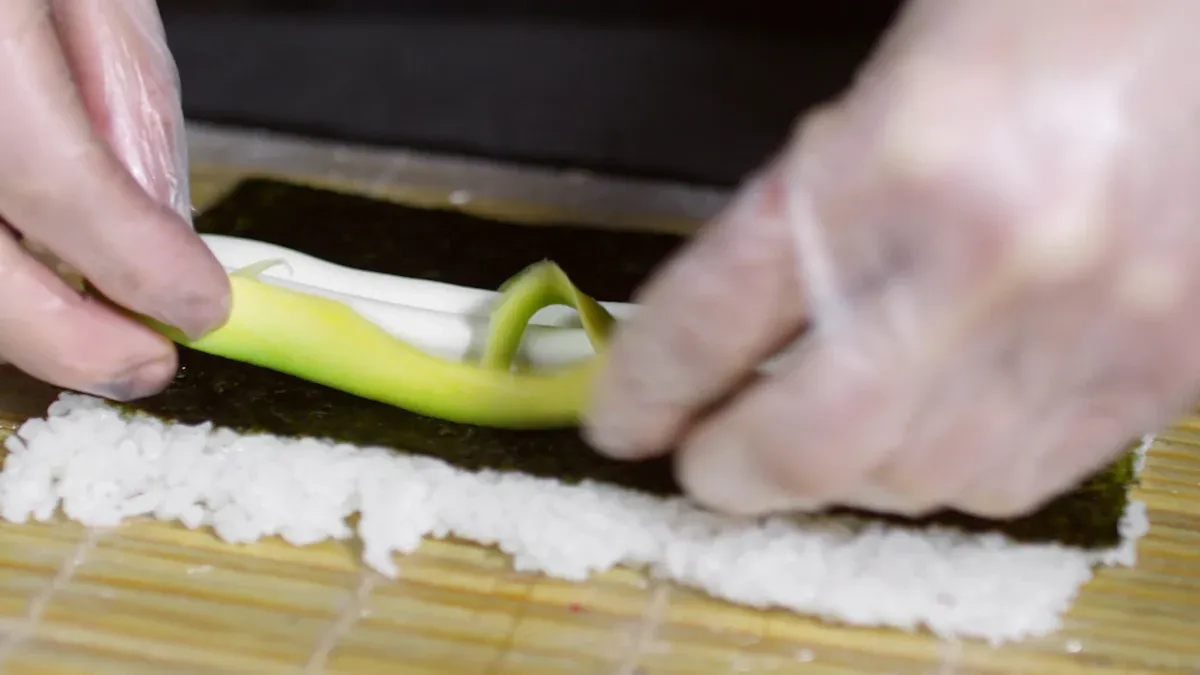
Using a bamboo mat makes rolling seaweed rolls much easier. It gives you control and helps create tight, uniform rolls. Here’s how you can do it:
- Position the Nori and Rice: Lay your bamboo mat flat on the counter. Place a sheet of nori shiny side down on the mat. Spread a thin layer of seasoned rice evenly over the nori, leaving about an inch of space at the top edge.
- Add Fillings: Arrange your chosen fillings in a horizontal line across the center of the rice. Don’t overfill—this makes rolling tricky.
- Start Rolling: Lift the edge of the bamboo mat closest to you and begin rolling it over the fillings. Use your fingers to tuck the fillings in as you roll.
- Seal the Roll: Once you reach the top edge, press gently to seal the roll. The empty space on the nori will stick to itself, holding the roll together.
Tip: Apply gentle but firm pressure as you roll. This keeps the roll tight without squishing the fillings.
Alternative Rolling Methods
If you don’t have a bamboo mat, don’t worry! You can still make seaweed rolls using these creative alternatives:
- Parchment Paper: Lay a sheet of parchment paper on your counter. Use it the same way you’d use a bamboo mat. It’s flexible and easy to clean.
- Plastic Wrap: Place plastic wrap over a clean kitchen towel. This setup mimics the bamboo mat and works well for rolling.
- Hand-Rolling: Skip the mat altogether and make hand rolls instead. Fold the nori into a cone shape, fill it with rice and toppings, and enjoy a fun, casual version of seaweed rolls.
For plant-based options, chefs recommend experimenting with fillings like marinated smoked tofu, savory seitan mixed with vegenaise, or marinated mushrooms. These alternatives add unique flavors and textures to your rolls.
Pro Tip: If you’re new to rolling, start with smaller rolls. Cutting the nori sheets in half makes them easier to handle.
Cutting and Presenting Seaweed Rolls
Once your rolls are ready, it’s time to cut and present them beautifully. Follow these steps:
- Prepare Your Knife: Use a sharp knife to slice the rolls cleanly. Wet the blade with water to prevent sticking.
- Cut Even Pieces: Cut each roll into six to eight equal pieces. Start by slicing the roll in half, then cut each half into smaller sections.
- Arrange on a Plate: Place the pieces neatly on a serving plate. Add garnishes like pickled ginger, wasabi, or a sprinkle of sesame seeds for extra flair.
Note: Presentation matters! A well-arranged plate makes your seaweed rolls look as good as they taste.
With these techniques, you’ll be rolling and serving seaweed rolls like a pro in no time. Whether you’re using a bamboo mat or trying alternative methods, the process is simple and fun.
Customizing and Perfecting Seaweed Rolls
Fun Ways to Change Up Seaweed Rolls
Making seaweed rolls is exciting because you can change them up. Mix different ingredients or try new ideas. Here are some fun suggestions:
- Fusion Flavors: Add smoked salmon and cream cheese for a unique taste. Spicy tuna with Sriracha also adds a bold kick.
- Vegetarian Options: Use grilled mushrooms, roasted sweet potato, or marinated tofu for a filling plant-based choice.
- Tropical Twist: Add pineapple or mango for a sweet flavor. Pair these with avocado or shrimp for balance.
- Crunchy Toppings: Sprinkle toasted sesame seeds or crushed tempura flakes for extra crunch.
Tip: Try new combinations! You might find a new favorite recipe.
Fixing Common Problems
Sometimes, making seaweed rolls can be tricky. Here’s how to solve common issues:
- Sticky Rice on Hands: Wet your fingers with water to stop rice from sticking.
- Rolls Breaking Apart: Use less filling and press firmly while rolling. Too much filling makes sealing harder.
- Nori Sheets Tearing: Be gentle with nori and don’t overload it with rice. If it rips, patch it with another small piece of nori.
- Uneven Slices: Use a sharp knife and clean it often. Wet the blade for smoother cuts.
Pro Tip: Keep practicing! The more you make rolls, the better they’ll look and taste!
Making seaweed rolls at home is more than just cooking—it’s a creative adventure. You can experiment with flavors, try new techniques, and even share the fun with friends. The more you practice, the better your rolls will get. So, grab your ingredients and start crafting your signature seaweed rolls today! 🌟
FAQ
What can I use if I don’t have sushi rice?
You can substitute sushi rice with short-grain or medium-grain rice. Just cook it slightly sticky for better rolling.
Tip: Avoid long-grain rice—it’s too dry for seaweed rolls.
How do I store leftover seaweed rolls?
Wrap them tightly in plastic wrap and refrigerate. Eat within 24 hours for the best taste and texture.
Can I make seaweed rolls without fish?
Absolutely! Use vegetables, tofu, or even scrambled eggs. Seaweed rolls are super versatile and perfect for vegetarian or vegan options.
Pro Tip: Try marinated mushrooms for a savory, umami-packed filling.

